
TL;DR:
- A 1975 Act inheritance claim allows certain family members and dependants to seek fair financial provision from an estate if the will or intestacy rules are inadequate.
- The claim must be made within six months of the Grant of Probate and depends on the claimant's eligibility among six specific categories.
A 1975 Act inheritance claim is a legal process that allows certain family members and dependants to seek reasonable financial provision from a deceased person's estate when the will, or the intestacy rules, fail to provide adequately. Formally known as a claim under the Inheritance (Provision for Family and Dependants) Act 1975, this is not about challenging whether a will is valid. It is about whether the provision made is fair given your financial needs. Courts in England and Wales have wide discretion to award lump sums, property transfers, or income. You must act quickly: court proceedings must be issued within six months of the Grant of Probate.
Who can make a 1975 Act inheritance claim?
Eligibility under the Inheritance (Provision for Family and Dependants) Act 1975 is limited to six categories of claimant. Understanding which category applies to you is the first step, because the standard of "reasonable financial provision" differs depending on your relationship to the deceased.
The six eligible categories are:
- Spouse or civil partner. A surviving spouse or civil partner at the date of death. This category benefits from the highest standard of provision, often assessed by reference to what they might have received on divorce.
- Former spouse or civil partner. A former spouse or civil partner who has not remarried or formed a new civil partnership. This category is narrower and depends heavily on financial circumstances.
- Child of the deceased. This includes biological, adopted, and adult children. Adult children can and do succeed, though courts scrutinise their financial independence carefully.
- Person treated as a child of the family. This covers stepchildren and others whom the deceased treated as their own child, for example within a blended family.
- Cohabitant of two or more years. A person who lived with the deceased as a spouse or civil partner for at least two years immediately before the death. This category is particularly important given that cohabiting partners have no automatic inheritance rights under English law.
- Financial dependant. Any person who was being maintained, wholly or partly, by the deceased immediately before death. This is the broadest and most fact-specific category.
Each category carries different evidential requirements. A cohabitant must prove two full years of cohabitation. A financial dependant must show the deceased was making a substantial contribution to their needs. Getting the category right before you proceed shapes the entire claim.
What are the time limits for making a claim?

The six-month deadline is the single most critical procedural fact in any inheritance claim under the 1975 Act. The six-month limit starts from the date of the Grant of Probate or Letters of Administration, not from the date of death. Many claimants miss this distinction and find themselves out of time before they have even taken legal advice.
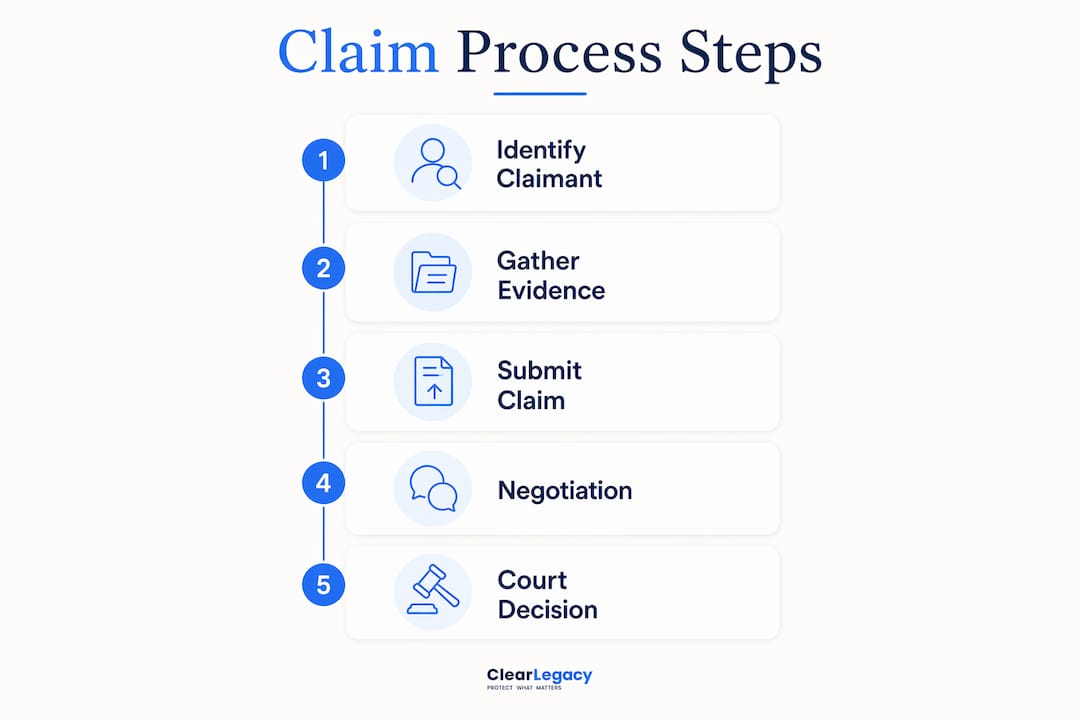
The procedural steps, in order, are:
- Obtain the Grant of Probate date. This is your starting point. The clock runs from this date, not from when you first became aware of the will's contents.
- Take legal advice immediately. Given the strict deadline, seek specialist advice as soon as you know a claim may be necessary.
- Send a Letter of Claim. Under the Pre-Action Protocol, you write to the personal representatives (executors or administrators) setting out your identity, your relationship to the deceased, the basis of your claim, and the provision you are seeking.
- Allow time for a response. Personal representatives typically have a reasonable period to respond, gather financial information, and take their own advice.
- Attempt negotiation or mediation. Most claims settle through negotiation or mediation before any court hearing. This saves time, money, and emotional strain for everyone involved.
- Issue court proceedings if necessary. If settlement fails, you issue a claim in the Family Division of the High Court or, for smaller estates, the County Court. This must happen within the six-month window.
Claims settled at negotiation often resolve within 3–9 months. Full trials can take 18–30 months or longer. That difference in timeline, and cost, is a powerful reason to invest in a well-drafted Letter of Claim from the outset.
Pro Tip: If you are approaching the six-month deadline and settlement talks are ongoing, issue court proceedings anyway to protect your position. You can continue negotiating after proceedings are issued. Missing the deadline without court permission ends your claim.
How do courts assess a claim under the 1975 Act?
Courts apply the standard of "reasonable financial provision" to every claim, but the definition varies by claimant category. For a surviving spouse or civil partner, reasonable provision is assessed by reference to what they might have received on divorce. This is sometimes called the "deemed divorce test" and can result in substantial awards. For all other claimants, the standard is limited to what is reasonable for their maintenance.
The court weighs a structured set of factors when deciding both whether to make an order and what form it should take:
- The claimant's current and future financial needs and resources
- The financial needs and resources of any other beneficiaries
- The size and nature of the estate
- Any physical or mental disability of the claimant or any beneficiary
- The conduct of the claimant and any other person
- The nature and length of the relationship between the claimant and the deceased
Courts have awarded sums such as £125,000 to estranged children despite explicit exclusion from a will. That figure illustrates that testamentary freedom, while respected, is not absolute. A will that deliberately cuts out a financially vulnerable child can still be overridden.
The types of order a court can make are varied:
| Order type | What it means in practice |
|---|---|
| Lump sum payment | A one-off cash payment from the estate to the claimant |
| Periodical payments | Regular income payments, often for a fixed term |
| Transfer of property | The court directs that a specific asset passes to the claimant |
| Settlement of property | Property is held on trust, often giving a lifetime interest |
| Variation of settlement | An existing trust or settlement is altered to benefit the claimant |
The court's discretion is genuinely wide. A claimant who demonstrates clear financial need, a close relationship with the deceased, and a reasonable claim is well placed. One who has significant independent wealth faces a much harder task.
Common challenges and misconceptions about 1975 Act claims
The most persistent misconception is that a 1975 Act claim requires the will to be invalid. It does not. A claim addresses whether provision is adequate, not whether the will was properly made. A perfectly valid, properly witnessed will can still be challenged under the 1975 Act if it leaves an eligible person without reasonable financial support.
Other common pitfalls include:
- Assuming the clock starts at death. The six-month period runs from the Grant of Probate, not the date of death. Probate can take many months to obtain, so the actual deadline may be further away than you think. But it can also arrive faster than expected.
- Overestimating financial independence as a barrier. Courts do consider a claimant's own resources, and high earning capacity reduces the prospect of a maintenance award. However, financial independence does not automatically disqualify you. The court looks at the full picture.
- Underestimating the Pre-Action Protocol. A poorly drafted Letter of Claim can undermine your position before proceedings begin. Solicitors stress that the Pre-Action Protocol is essential for early settlement and cost avoidance.
- Delaying because the situation feels uncertain. Courts are increasingly strict on the six-month deadline. Uncertainty about whether to claim is not a good reason to wait.
Pro Tip: Do not wait for the estate to be distributed before acting. Once assets have been paid out to beneficiaries, recovering them becomes significantly more complicated, even if your claim ultimately succeeds.
What practical steps should you take if considering a claim?
Acting promptly and methodically gives your claim the best possible foundation. The steps below apply whether you are at the earliest stage of considering a claim or already approaching the deadline.
- Gather key documents. Obtain a copy of the will, the Grant of Probate, and any information about the estate's value. If you do not have these, a solicitor can help you obtain them.
- Seek legal advice without delay. The six-month deadline is strict. Permission to proceed after the deadline requires strong justification and is very rarely granted. Early advice protects your options.
- Prepare a clear, substantiated Letter of Claim. Set out your relationship to the deceased, your financial position, the provision made (or not made) for you, and what you are seeking. Be specific. Vague letters invite vague responses.
- Engage in negotiation or mediation. Mediation succeeds in the majority of cases where it is attempted. Refusing mediation without good reason can lead to cost penalties even if you win at trial.
- Set realistic expectations. A claim that settles through negotiation typically resolves in 3–9 months. A contested trial can take well over two years. Factor both the financial and emotional costs into your decision.
Understanding your inheritance rights under intestacy is also worth doing early, particularly if no will exists. The intestacy rules may already provide some entitlement, which affects the strength of any 1975 Act claim.
Key takeaways
A 1975 Act inheritance claim succeeds or fails on eligibility, evidence of financial need, and strict compliance with the six-month deadline from the Grant of Probate.
| Point | Details |
|---|---|
| Six-month deadline is fixed | The clock starts from the Grant of Probate, not the date of death. |
| Six eligible claimant categories | Spouses, former spouses, children, stepchildren, cohabitants of 2+ years, and financial dependants can all claim. |
| Valid wills can still be challenged | A 1975 Act claim is about adequacy of provision, not validity of the will. |
| Most claims settle before trial | Negotiation and mediation resolve the majority of disputes within 3–9 months. |
| Financial need is the central test | Courts weigh claimant resources, estate size, and other beneficiaries before making any award. |
Why early action matters more than most families realise
I have seen families lose viable claims not because their case was weak, but because they waited. The six-month deadline feels distant when you are grieving. It arrives faster than anyone expects, especially when probate is granted quickly.
What strikes me most about 1975 Act claims is how often they are preventable. Changing family structures, particularly blended families with stepchildren and long-term cohabitants, are driving a genuine increase in these disputes. A cohabitant of twenty years who is left nothing by intestacy has a strong claim. But that claim, and the distress it causes everyone involved, could have been avoided entirely with a properly drafted will.
The Pre-Action Protocol letter is underused and undervalued. A well-written letter, sent promptly, frequently produces a settlement offer within weeks. I have seen cases where a clear, evidenced letter resolved a six-figure dispute without a single court hearing. The letter is not a formality. It is your most powerful tool.
Regularly reviewing your will, particularly after major life changes such as remarriage, separation, or the birth of a child, reduces the risk of a claim arising in the first place. Courts balance testamentary freedom against financial need. A will that reflects your current family circumstances and makes considered provision for dependants is far harder to challenge successfully.
— Sat
Protect your family with a clear, legally valid will
A well-drafted will is the most effective way to reduce the risk of a 1975 Act claim arising after your death. When your wishes are clearly recorded and your dependants are properly provided for, the grounds for a family provision claim narrow considerably.

Clearlegacy makes will-writing straightforward and affordable. Starting from just £69, you can write a legally valid will online in around 15 minutes, with your document reviewed by a qualified estate planner and delivered within 24 hours. Over 100 UK families have already used Clearlegacy to protect their estates. If your circumstances have changed recently, a personalised estate risk assessment can help you identify gaps before they become disputes.
FAQ
Who is eligible to make a 1975 Act claim?
Six categories of person can claim: spouses, civil partners, former spouses or civil partners who have not remarried, children (including adult and adopted children), stepchildren, cohabitants of two or more years, and financial dependants maintained by the deceased.
Does a will have to be invalid to bring a 1975 Act claim?
No. A claim under the Inheritance (Provision for Family and Dependants) Act 1975 challenges whether the provision made is adequate, not whether the will is legally valid. A properly executed will can still be overridden if it fails to make reasonable financial provision for an eligible claimant.
When does the six-month deadline start?
The six-month period starts from the date of the Grant of Probate or Letters of Administration, not from the date of death. Missing this deadline without court permission almost always ends the claim.
What can a court award in a 1975 Act case?
Courts can award lump sums, periodical payments, property transfers, lifetime interests in property, or variations of existing settlements. The type and size of award depends on the claimant's financial need, the estate's value, and the needs of other beneficiaries.
Can a cohabitant make a 1975 Act inheritance claim?
Yes, provided they lived with the deceased as a spouse or civil partner for at least two years immediately before the death. Cohabitants have no automatic inheritance rights under English law, making the 1975 Act their primary legal route to provision from an estate.